how I think about the work, and the threads that run through it.
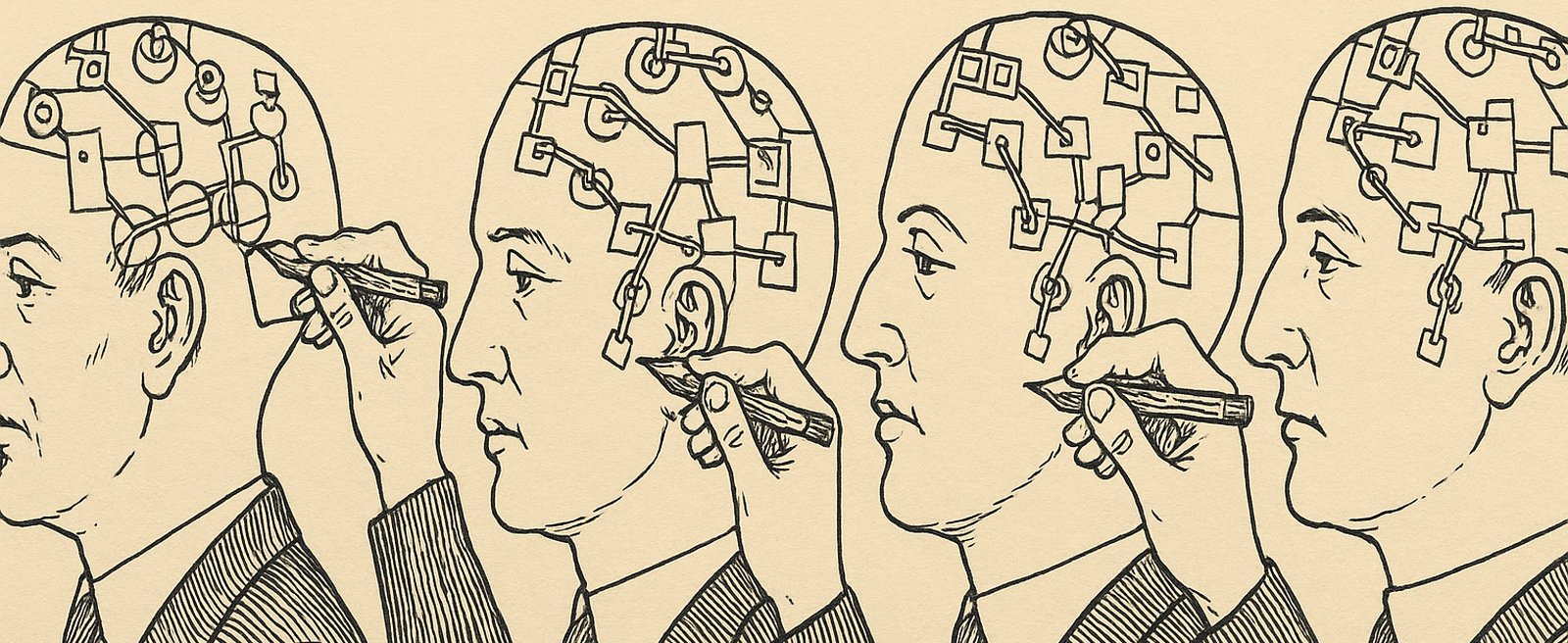

I build and study conversational AI agents — systems that must execute complex tool-using tasks while sustaining long, coherent conversational interactions, the two things real-world deployments demand at once. I did that work at Sierra, leading the τ-Bench family of benchmarks (live leaderboard at taubench.com). At Mercor, as a founding member of the APEX research team, I’m taking it beyond the single conversation — to agents inside organizations, working with people, and changing the work itself.
I came up through computational cognitive science, studying how humans use language as part of the continuous action–perception cycles that ground them in their environment. That work is rooted in cognitive linguistics — the view of language as an activity, embodied and situated, rather than a disembodied symbol system — and that lens still shapes how I think about agents today. Since then I’ve spent years building conversational systems deployed in the real world across several startups. My research view is shaped by that practice: the minutiae of everyday interaction — the ecological details of real systems in real deployments — are where the whole-system challenges actually surface. You don’t see them from the top down; you see them from the inside.
A tension I keep coming back to, and another thread I’ve worked on throughout, is the place of structure in language and cognition. Humans don’t just associate — they reason over concepts, need guarantees, organize knowledge. Cognitive science taught me to take that seriously, and it’s part of why neuro-symbolic systems have run through my work for years: how do we let language models do what they do well while still honoring the kinds of structured, accountable reasoning that real understanding seems to require? I don’t have a clean answer. The latest iteration of this thread is From Generating Answers to Building Explanations, from my time at Elemental Cognition.
A third thing cognitive science taught me, and one I think the field of AI underweights: cognitive systems are systems of systems, organized for maintenance and resilience as much as for performance. An intelligent system isn’t a clever algorithm — it’s something that exists through time, adapts to its environment, and keeps learning from it. I’ve found, perhaps surprisingly, that modern MLOps is one of the clearest illustrations of this: what learns, in any production setting, isn’t a model on its own; it’s the whole pipeline of data, evaluation, deployment, monitoring, and iteration around it. And in fact it doesn’t stop at the pipeline — the real “learning system” is the whole organization around it: the people gathering requirements, the QA teams catching regressions, support and ops closing the loop with users. Maintenance is the substrate of intelligence, not an afterthought, and it is irreducibly sociotechnical.
The throughline is verum factum: we know what we make. Theories of language, cognition, and intelligence are most trustworthy when you can build them, run them, maintain them, and watch them fail in informative ways. Benchmarks are the same idea pointed at agents — a discipline for being honest about what these systems can and can’t do.